



Blog
Drywall Repair vs Replacement: When Each Makes Sense

A crack, a hole, or a water stain on a wall raises the same question: patch it or replace the board? The drywall repair vs replacement decision depends on how much damage there is, whether the board is still sound and dry, and what caused the damage in the first place. This guide explains when drywall repair is enough, when replacement makes sense, how to find the cause, and what to check before work starts in an NYC apartment, including older buildings where the wall may not be drywall at all.
The Short Answer
Repair when the damage is local, the board is firm and dry, and the cause is already fixed. Replace when the board is soft, swollen, moldy, or crumbling, when the damaged area is large, or when the same crack keeps coming back. Use this list as a first check:
- Nail holes, anchors, small dents: repair.
- Hairline cracks at corners or seams: repair, after checking for movement.
- Screw pops and loose tape: repair.
- Larger holes: patch with a backing, or replace the section.
- Water-stained board that is firm and dry: may be repaired once the leak is fixed.
- Soft, swollen, crumbling, or moldy board: replace.
- A sagging ceiling: replace the affected board and find the cause.
This list is a starting point. A contractor should inspect the wall before pricing the work.
When Repair Is Enough
Small holes, dents, and nail pops
Filler compound, sanding, priming, and paint are normally all that is needed. Matching the surrounding finish matters more than the repair itself.
Hairline cracks
Cracks at corners, above doors, or along seams are common in buildings that move with the seasons. They can be taped and filled, and correct taping and compound reduce the chance of cracking again. If a crack reopens quickly, look for movement or moisture behind it.
Larger holes
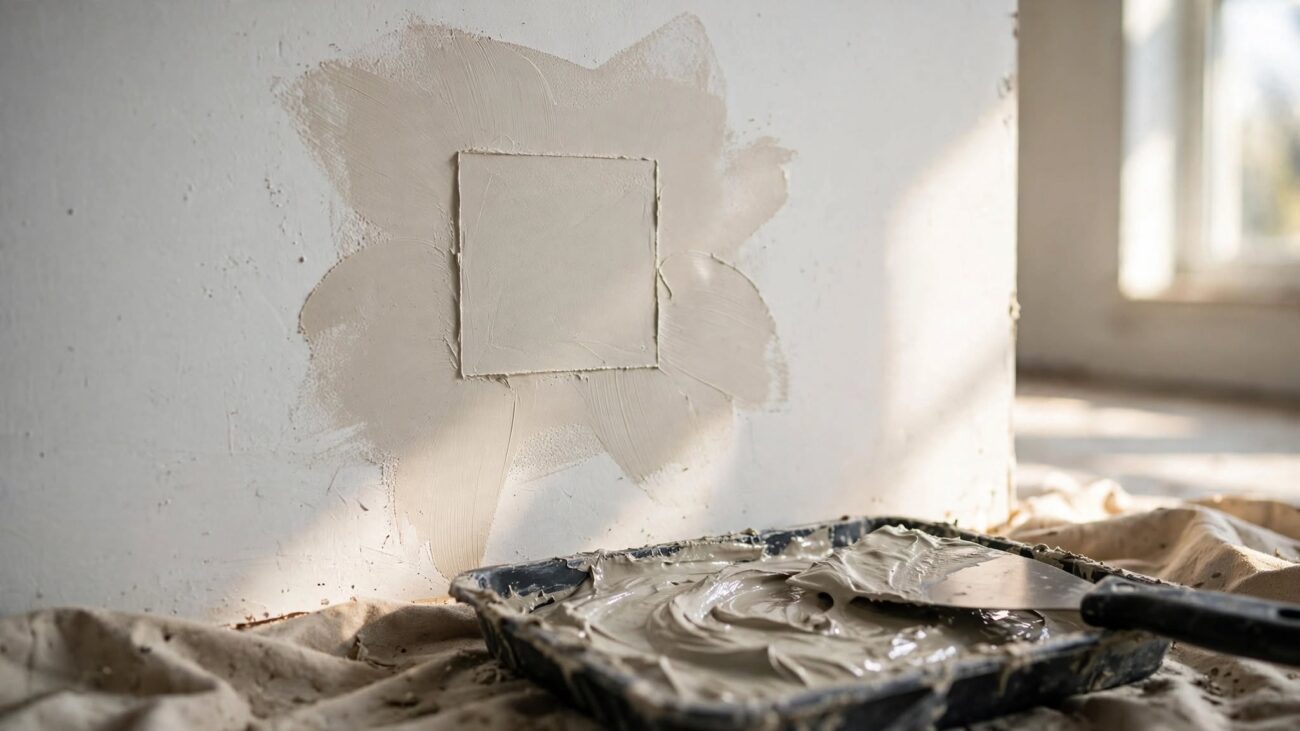
Holes left by removed fixtures or a door handle need a backing or a cut-in patch, so the repair has something to hold to. Cut-in patches are finished with joint compound in several thin coats, with drying time between coats.
When Replacement Makes Sense
Water damage
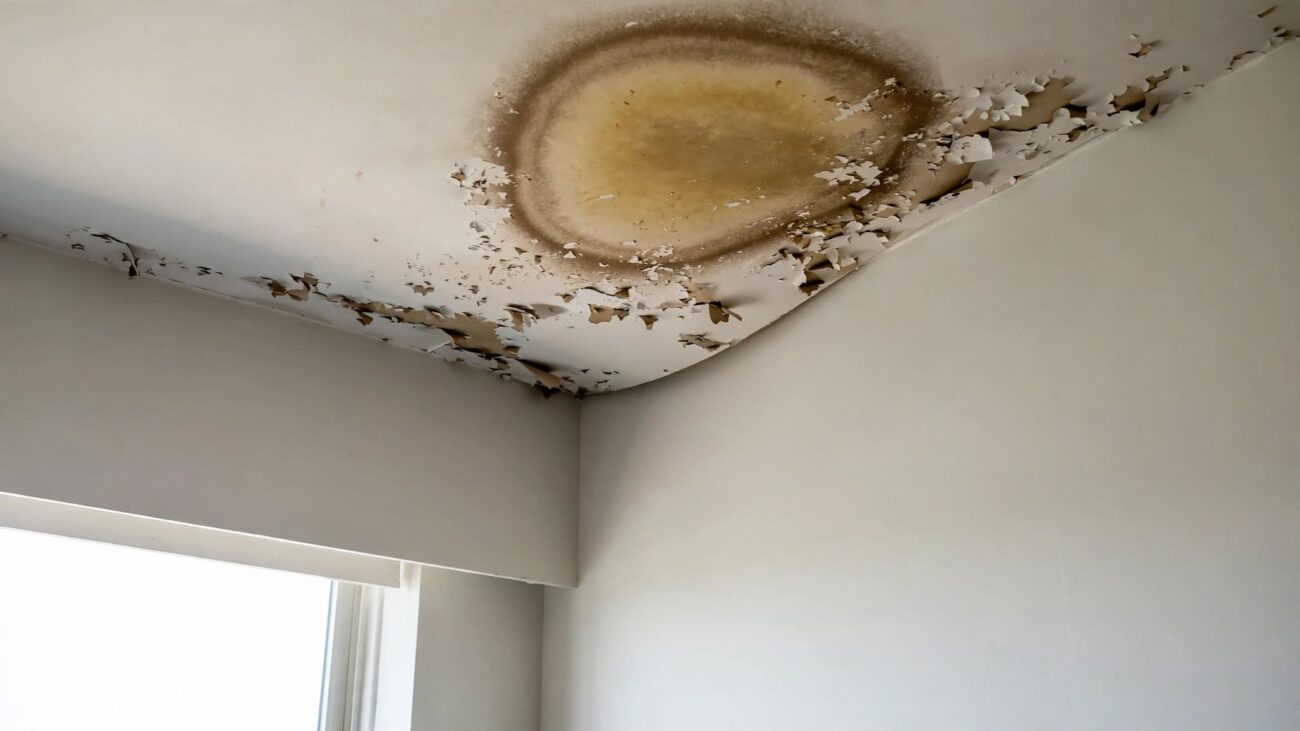
Drywall that is soft, swollen, bubbling, or damp has lost strength, and wet board can grow mold. Once the leak is fixed and the area is dry, the damaged section is cut out and new board is installed. Our guide to repairs after a leak explains the sequence.
Mold
Larger areas of mold generally need licensed mold professionals under New York State rules, so do not cover or patch them. Replacement follows once the area has been cleared and confirmed dry.
Crumbling or delaminated board
If the paper face is peeling or the gypsum is breaking apart, patching will not hold.
Sagging ceilings
A bulging or sagging ceiling often signals water above or loose fasteners. Keep people away from it and have it checked before any repair.
Repeated failure
If the same patch fails more than once, the board is probably not the problem. Look for movement in the framing, a recurring leak, or poor fastening.
Find the Cause Before You Repair
A repair that ignores the cause will fail. For water stains, find and fix the leak first, and ask for a moisture reading before the wall is closed or painted. For cracks, note where they appear and whether they widen. For damage that keeps returning in the same place, such as a corner hit by furniture or doors, consider corner protection.
In rental buildings, recurring problems are worth logging by unit, so patterns become visible.
Is It Drywall or Plaster?
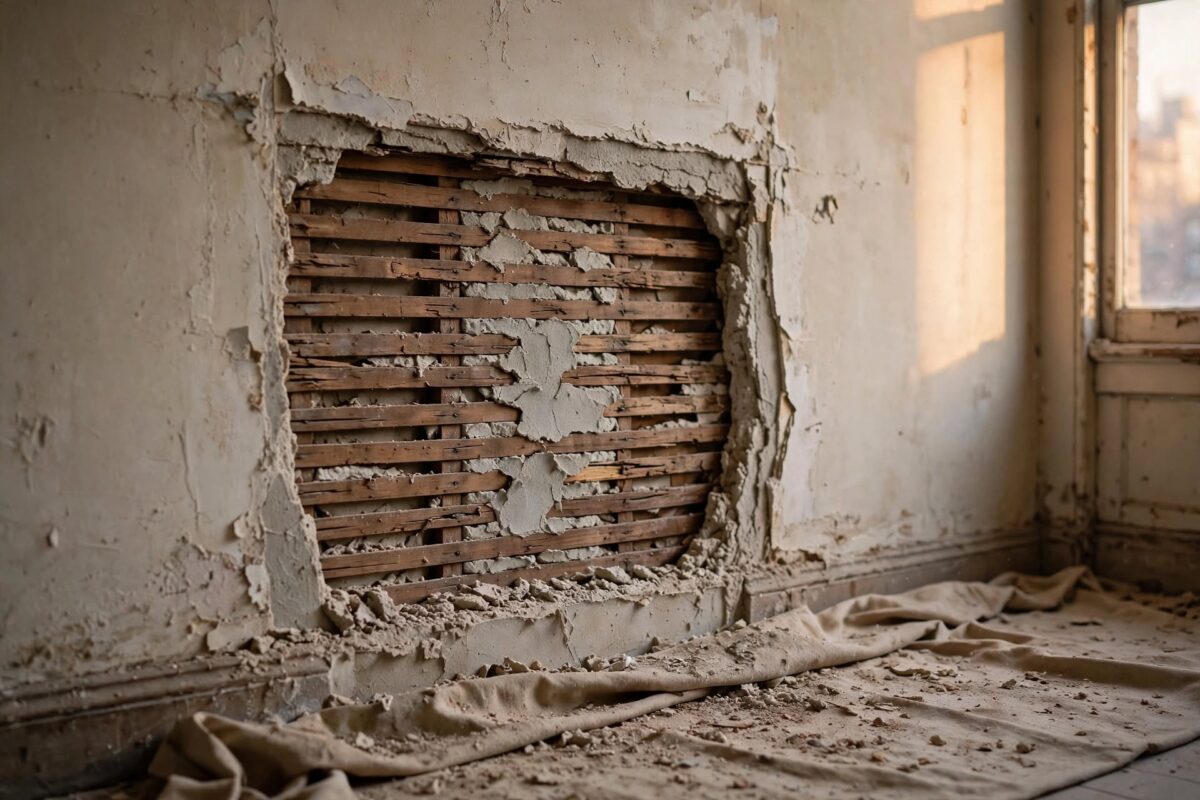
Many older NYC apartments have plaster over lath rather than drywall. The two behave differently: plaster cracks are repaired with different methods, and cutting into plaster is more involved than cutting drywall. Ask the contractor to identify the material before pricing, because it changes the approach.
Older buildings may also contain materials such as lead paint and, in some older joint compounds and plasters, asbestos. In housing built before 1978, paid work that disturbs painted surfaces falls under EPA’s lead-safe renovation rules, and a contractor should show proof of certification. Ask your architect or contractor whether testing is needed before wall work in an older building.
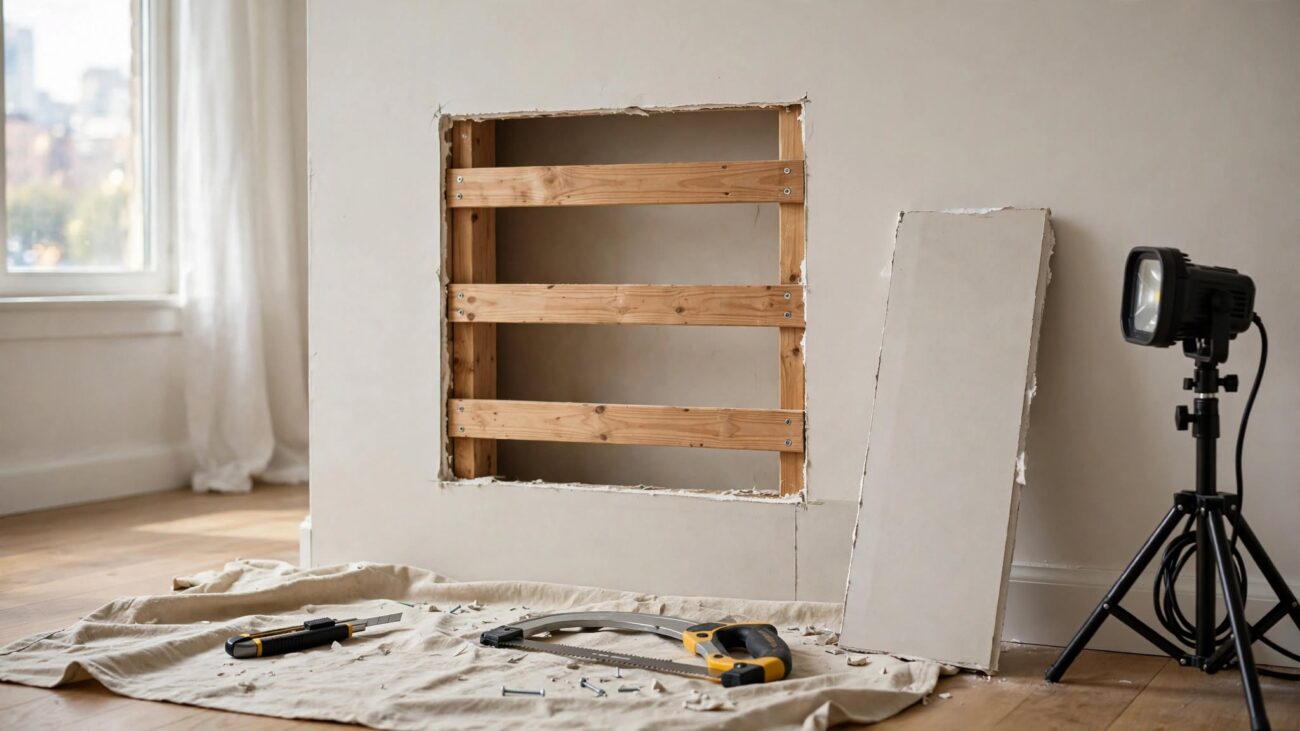
What a Proper Drywall Repair Looks Like
- Protect floors, furniture, and common areas.
- Cut out or clean up the damaged area back to sound material.
- Install backing and a patch or new board, fastened securely.
- Tape and apply joint compound in thin coats, with drying time between each.
- Sand smooth and wipe away the dust.
- Prime, so the repair absorbs paint like the rest of the wall.
- Paint the wall corner to corner, or the whole ceiling, for an even finish.
Why the Finish Matters
Repairs are most visible in raking light from windows and under glossy or dark paint. A smoother finish, such as a skim coat over a larger area, hides patches better than spot fills. Ask your contractor what level of finish is included, and whether the whole wall will be skim coated or only the repair.
Our drywall installation and interior painting teams work in sequence, so the repair is primed and painted only after it has been checked.
What Affects the Cost and Schedule
Price depends on the size of the damaged area, how many repairs there are, whether ceilings are involved, how easy the access is, and whether a whole wall or room has to be repainted to match. Drying and curing times for compound, primer, and paint set the schedule more than the repair itself, so ask for a schedule that shows each coat. In occupied buildings, work hours, dust control, and elevator access also apply.
Repairs in Occupied Buildings and Co-ops
Even cosmetic repairs may need notice or approval in a co-op or condo, and most buildings require a certificate of insurance from the contractor. Ask the managing agent for the current rules before scheduling.
Landlords turning over a unit can find a checklist in our guide to make ready services.
Drywall Repair vs Replacement: Frequently Asked Questions
Can I patch a hole in drywall myself?
Small holes and nail pops are manageable for a careful DIYer: fill, sand, prime, and paint. Larger holes need a backing or a cut-in patch, and the finish often shows in raking light. In buildings built before 1978, work that disturbs painted surfaces can fall under EPA lead-safe rules, so check before sanding. A contractor is the safer choice for large or visible repairs.
Why do cracks keep coming back?
Cracks reopen when the cause was not addressed: movement in the framing, seasonal changes, a recurring leak, or tape and compound that were not applied correctly. If a repair fails more than once, have the wall inspected rather than patched again. Proper taping and compound help, but they cannot fix movement or moisture behind the wall.
How do I know if drywall has water damage?
Look for stains, bubbling or peeling paint, soft or swollen spots, and a musty smell. Press gently on the area: board that feels soft or crumbles has lost strength. Moisture can sit behind a wall that looks fine, so ask for a moisture reading before repairing. Fix the source of the leak first, whether it is a pipe, a window, or the unit above.
Is mold on drywall a reason to replace it?
Often, yes, but larger areas of mold generally need licensed mold professionals under New York State rules, so do not cover or patch it yourself. Once the area has been cleared and confirmed dry, damaged board is replaced and the wall is finished. If mold appears after a leak, see the section on water damage above.
Do I need to repaint the whole wall after a repair?
Usually the whole wall, corner to corner, is repainted. Painting only the patch tends to show differences in color and sheen, especially under window light. For ceilings, painting the full ceiling gives the best result. Ask your contractor what is included in the scope, so there are no surprises about how much gets painted.
Is my wall drywall or plaster?
Many older NYC apartments have plaster over lath, while newer renovations use drywall. A contractor can usually tell by the thickness, the sound when the wall is tapped, and by looking behind switch plates or inside damaged areas. The method of repair differs, so identify the material before pricing the work.
How do I request a drywall repair estimate?
Send photos of the damage, the building address, and a short description through the form on this page, or call (646) 664-1696. Include whether the damage is from a leak, which room it is in, and whether the building is occupied. We review the details and reply with next steps.