

Blog
Common Area Renovation for Buildings

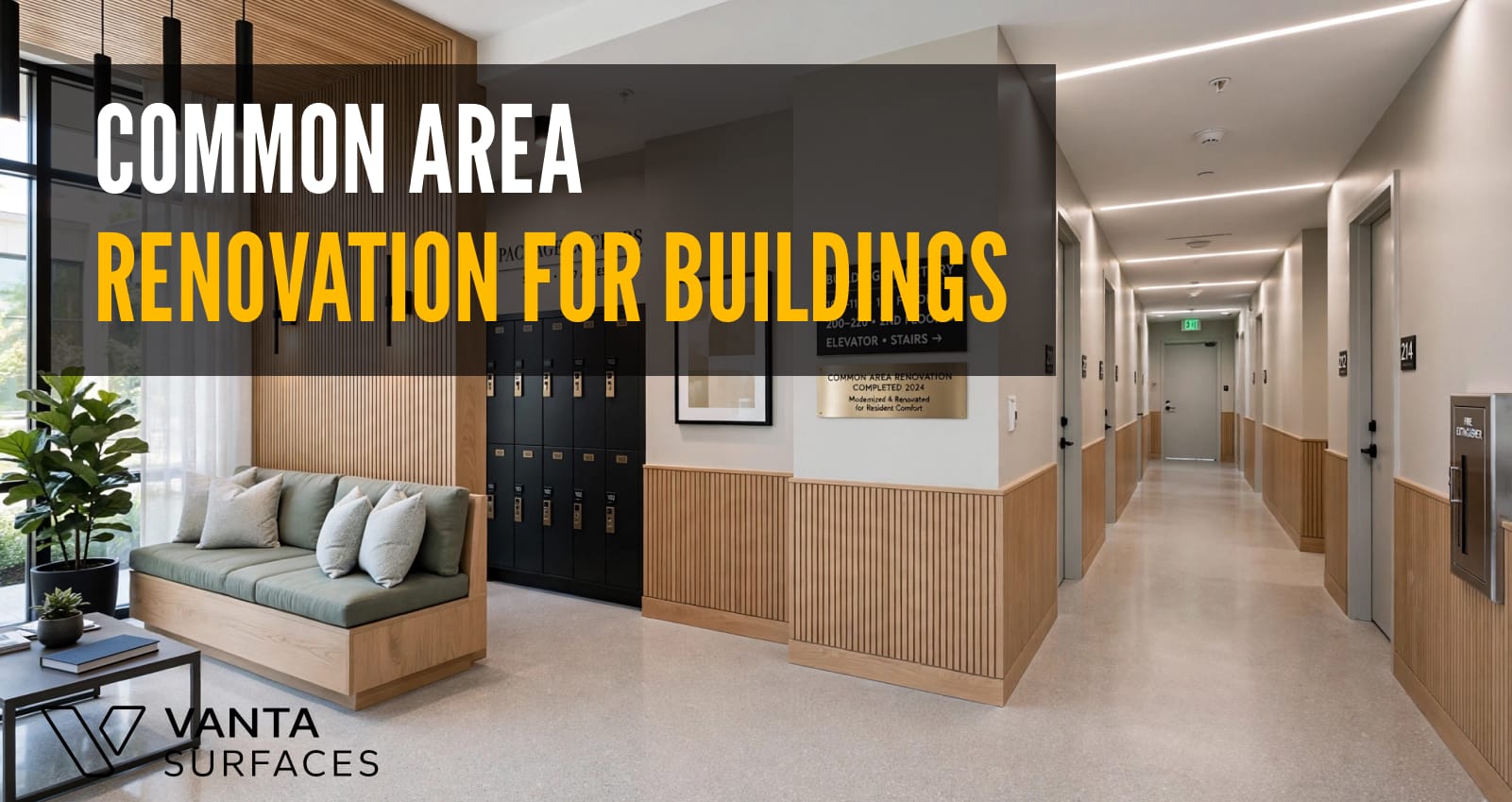
Lobbies, corridors, and stairwells are the part of a building that everyone sees every day: residents, visitors, delivery staff, and prospective tenants on a tour. Common area renovation for buildings in NYC differs from unit work because the space never stops being used. Vanta Surfaces plans and carries out common area renovation for buildings across Manhattan, Brooklyn, Queens, and the Bronx so the work stays safe, tidy, and out of the way of daily traffic.
This guide covers how to plan around traffic and deliveries, how to keep exits and fire safety intact, which finishes hold up in heavy-use areas, and how to get board or owner approval. Related services include interior painting and drywall installation.
Common Area Renovation for Buildings: What Counts as a Common Area
The spaces we mean
- Lobbies and vestibules
- Corridors and landings
- Stairwells
- Mail and package rooms
- Laundry and amenity rooms
Who commissions the work
Co-op and condo boards, building owners, and property managers all order common area work, and each has a different approval path. Knowing who signs off, and what they need to see, shortens the planning stage.
Why it differs from unit work
The space is in constant use, exits are shared, several parties have a say, and work hours are limited. A good plan treats those constraints as the starting point.
Why Common Areas Deserve Their Own Plan
First impressions
Prospective tenants and buyers form an opinion at the front door. Scuffed walls, stained ceilings, and tired lighting in the lobby or hallway tell visitors the building is not well kept, whatever the units look like.
Safety and egress
Corridors and stairwells are also the building’s exits. They need to stay clear, lit, and usable throughout the work. Anything that affects fire-rated doors, exit signs, lighting circuits, or alarms should involve the building’s licensed professionals and the super.
Heavy wear
Moving days, deliveries, strollers, and carts hit the same walls and corners every week. Finishes chosen for a quiet bedroom will not survive there, so the specification matters more than in a unit.
What's Included in Common Area Renovation for Buildings
Walls, ceilings, and paint
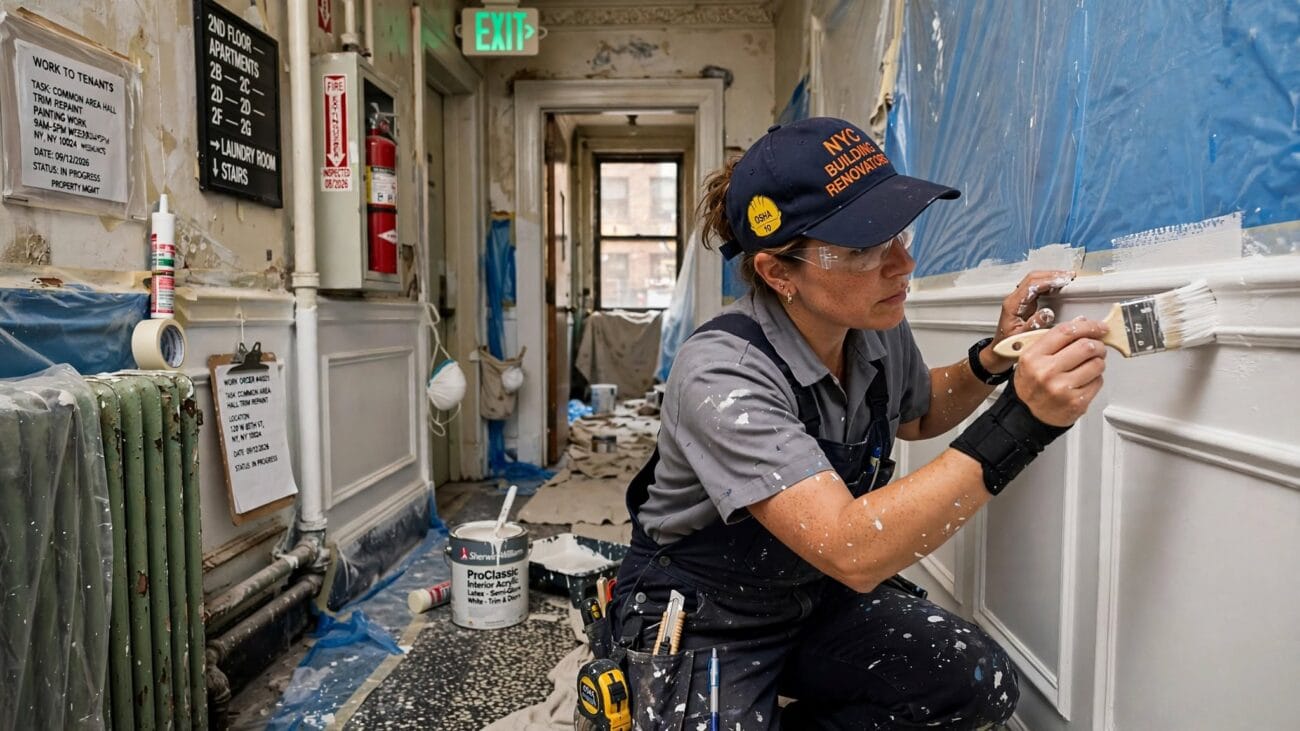
Our drywall installation crews repair dents, cracks, and water stains, and our interior painting team finishes with scuff-resistant, washable paint. In high-impact spots, such as corners and elevator landings, consider adding wall or corner protection.
Doors, trim, and paneling
Worn doors, trim, and paneling can be repainted or renewed with architectural film wraps, which avoids demolition in a space people are still using. Elevator cabs can often be refreshed without replacement; see our guide to elevator interior resurfacing.
Flooring and lighting
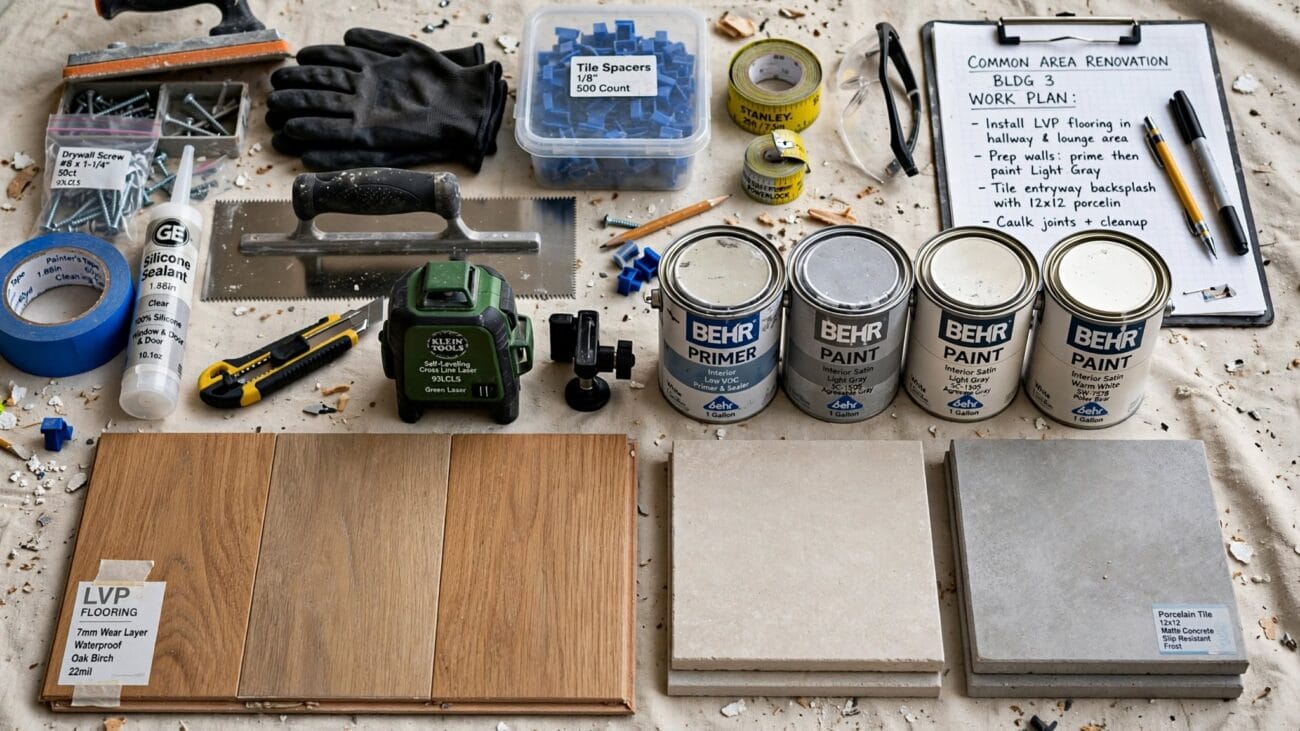
Flooring and fixture updates can be part of the scope. Electrical work must be done by licensed electricians, and we schedule our work around theirs so surfaces are not damaged and the corridor is not blocked longer than necessary.
Everything around the work
We plan for mail and package deliveries, move-ins, and resident access, so the building keeps running while the work goes on.
How We Run a Common Area Renovation
Step 1: Walkthrough
We walk the space with the manager or super, note traffic patterns, delivery times, and quiet hours, and photograph the condition.
Step 2: Phasing plan
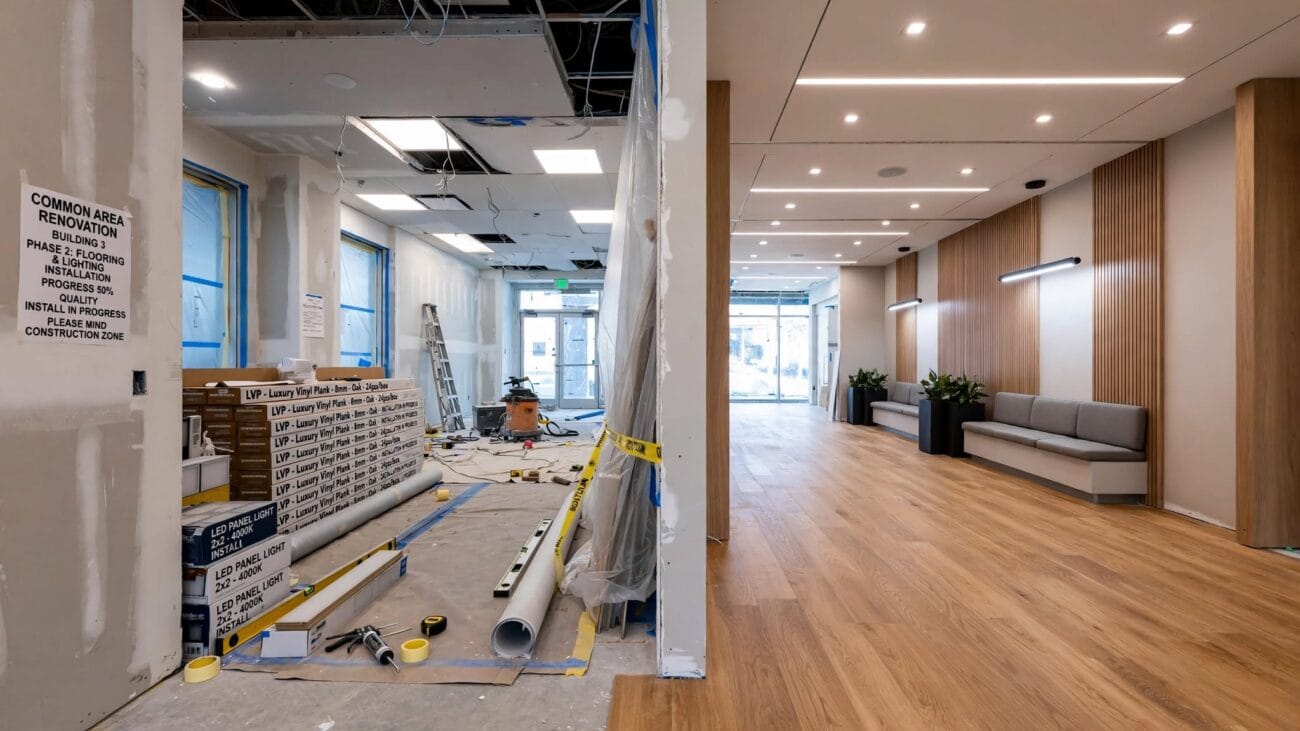
We split the area into sections so there is always a clear path. A lobby might be done one half at a time, and a corridor one stretch at a time, at hours that suit the building.
Step 3: Protection and notices
Floors and elevators are protected, barriers and wet-paint signs go up, and residents receive a notice with dates and a contact.
Step 4: Execution
Repairs come first, then priming and paint, then flooring and touch-ups. We keep exits clear and clean up daily.
Step 5: Final check and handover
We walk the finished space with you and send completion photos.
Approvals and Building Rules
Boards and owners
Co-op and condo boards usually need to approve common area work, sometimes by vote and against a budget. A package with the scope, samples, schedule, and certificate of insurance (COI) makes that decision easier.
Permits and licensed trades
Cosmetic updates generally do not need a DOB permit. Changes to lighting circuits, egress, fire-rated assemblies, or structure do, and need licensed professionals. Changes to entrances, ramps, or door hardware may also have accessibility requirements, so check with your architect.
Older buildings
Common areas in housing built before 1978 are covered by EPA lead-safe rules for paid work that disturbs paint. Ask any contractor for proof of certification.
Timeline and Cost of Common Area Renovation for Buildings
How long it takes
Timing depends on the size of the area, how it is phased, and whether work runs after hours. Repair and paint can move quickly section by section, while flooring and lighting take longer. We give you a schedule once we have walked the space.
What affects the price
The main factors are the area, the wear to repair, the materials, and the access constraints. Work done in phases or after hours can take longer and cost more than work in a closed-off space, which is the trade-off for keeping the building open.
Why Choose Vanta Surfaces for Common Area Renovation for Buildings
Planning around daily traffic
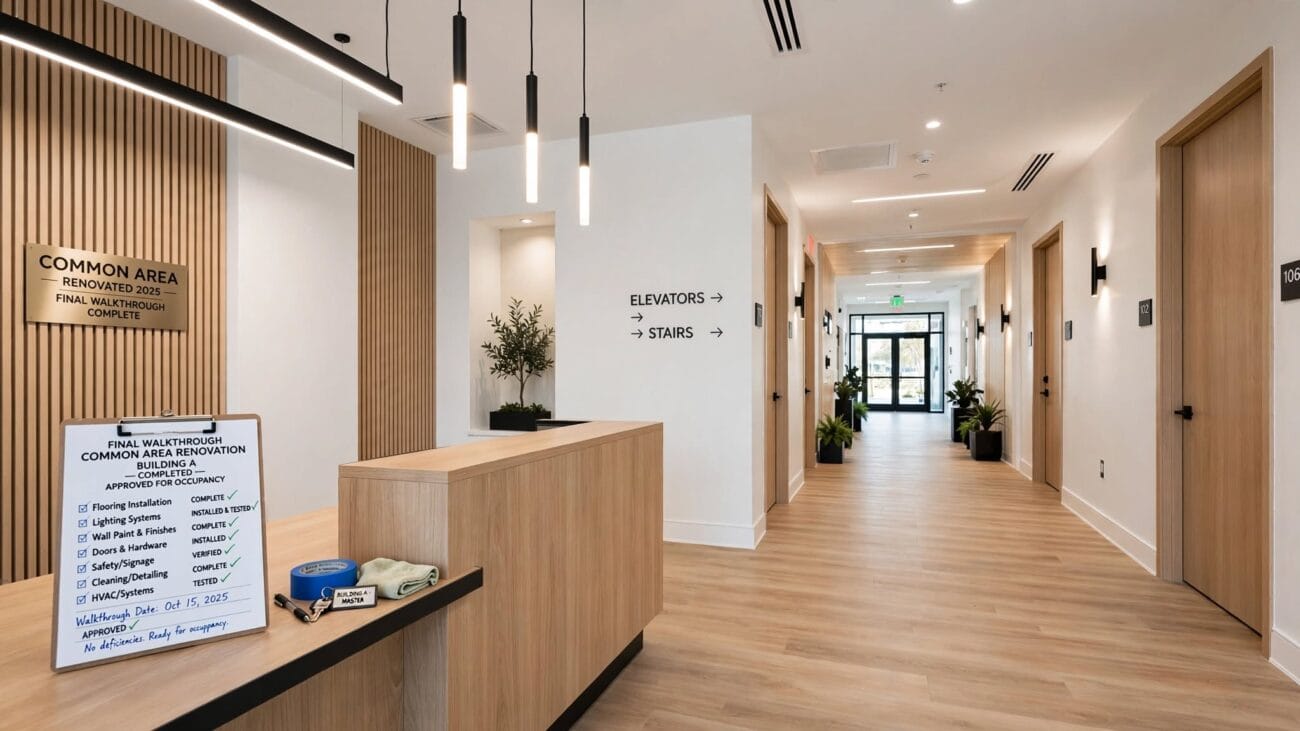
One project manager owns the phasing, protection, and communication, so the building keeps working while the finish improves.
Licensed and insured
We hold NYC DCWP license 2137851-DCWP, carry insurance, and provide the COI your building or board requires. See finished work on our projects page or our page for property managers.
Common Area Renovation for Buildings: Frequently Asked Questions
Can residents keep using the lobby during the work?
Usually yes. We phase the work so a clear, protected path always remains, and we post notices with dates and a contact person.
Do we need board approval?
For co-ops and condos, almost always. A package with the scope, finish samples, schedule, and insurance certificate helps the board decide.
How do you keep exits clear?
Corridors and stairwells are worked in sections, materials are staged away from exit routes, and the super is told what is happening each day.
Which finishes hold up in heavy traffic?
Washable, scuff-resistant paint, durable flooring, and protection at corners and landings. We recommend a specification for each area.
Can the work be done after hours?
Often, depending on the building’s rules and noise limits. After-hours work can add cost, so we price it separately.
Do you handle lighting and electrical work?
Electrical work needs licensed electricians. We coordinate our finish work around theirs, so the result is clean and on schedule.
How long does a common area renovation take?
It depends on the size of the area, the phasing, and the scope. We give you a schedule after walking the space.
How do I request common area renovation for buildings?
Use the form on this page or call (646) 664-1696 with photos and the building address. We review them and reply with next steps.