



Blog
Interior Painting Prep: What Happens Before the First Coat

A good paint job is decided before the first coat goes on. In an NYC apartment, interior painting prep covers protecting floors and furniture, repairing walls, priming stains, masking trim, and leaving enough time for drying. This guide explains what happens in each step, what you need to do before painters arrive, how co-op rules and older buildings affect the work, and what separates a clean result from one that shows every flaw in window light.
Why Preparation Matters More Than the Paint
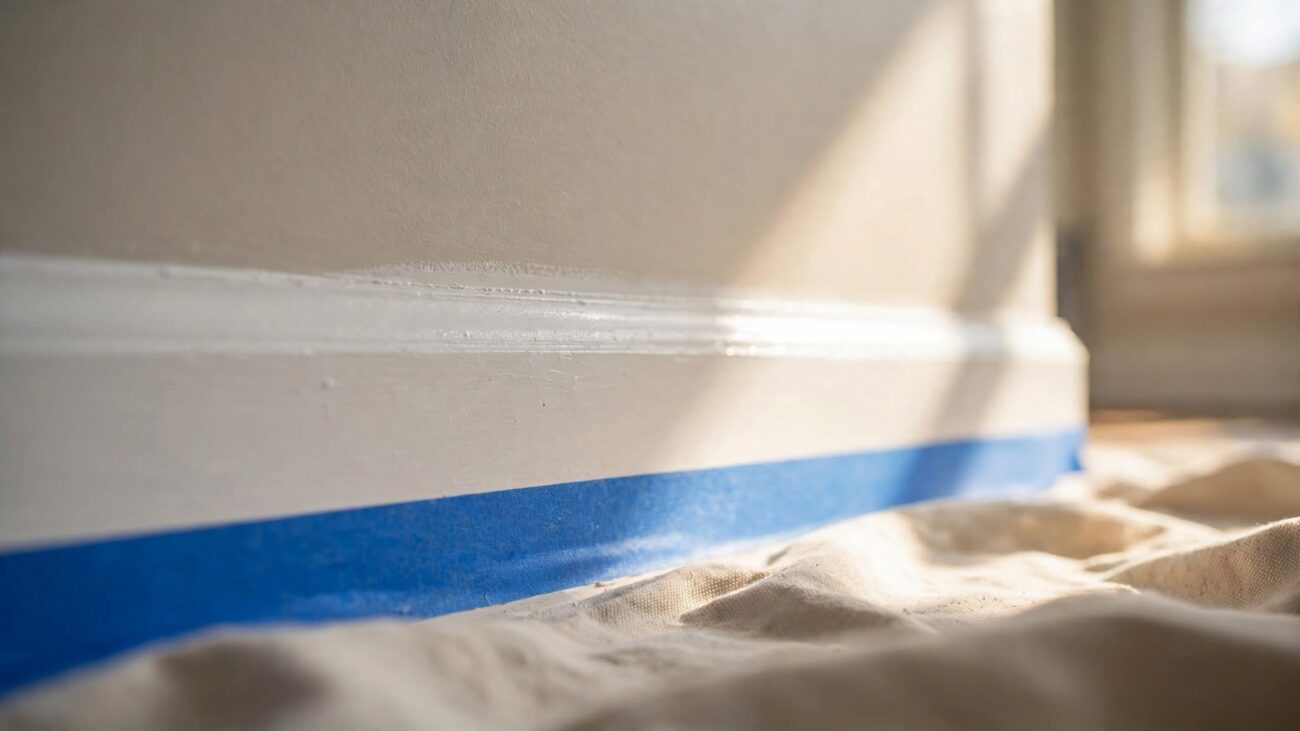
Paint is thin, so it shows what is underneath. Dents, patches, stains, and rough edges stand out in the raking light from apartment windows, especially under glossy or dark colors. Paint also sticks poorly to dirty, glossy, or damp surfaces, which leads to peeling later. On many jobs, preparation takes as long as the painting itself, which is why a quote that skips it often looks cheaper than it is.
What Painters Do Before the First Coat
1. Protect the room
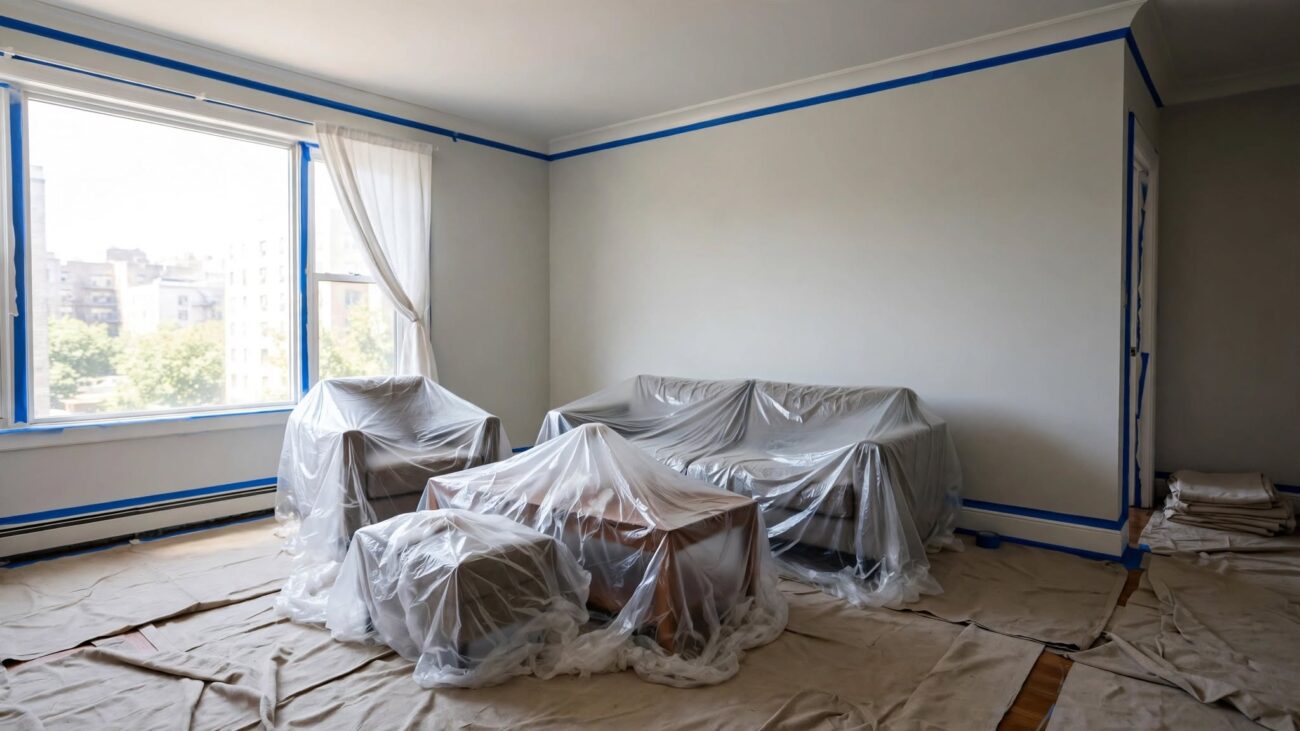
Floors, furniture, fixtures, and hallways are covered, and outlets and switch plates are protected or removed. In an apartment building, the route to the unit may be protected as well.
2. Clean and inspect
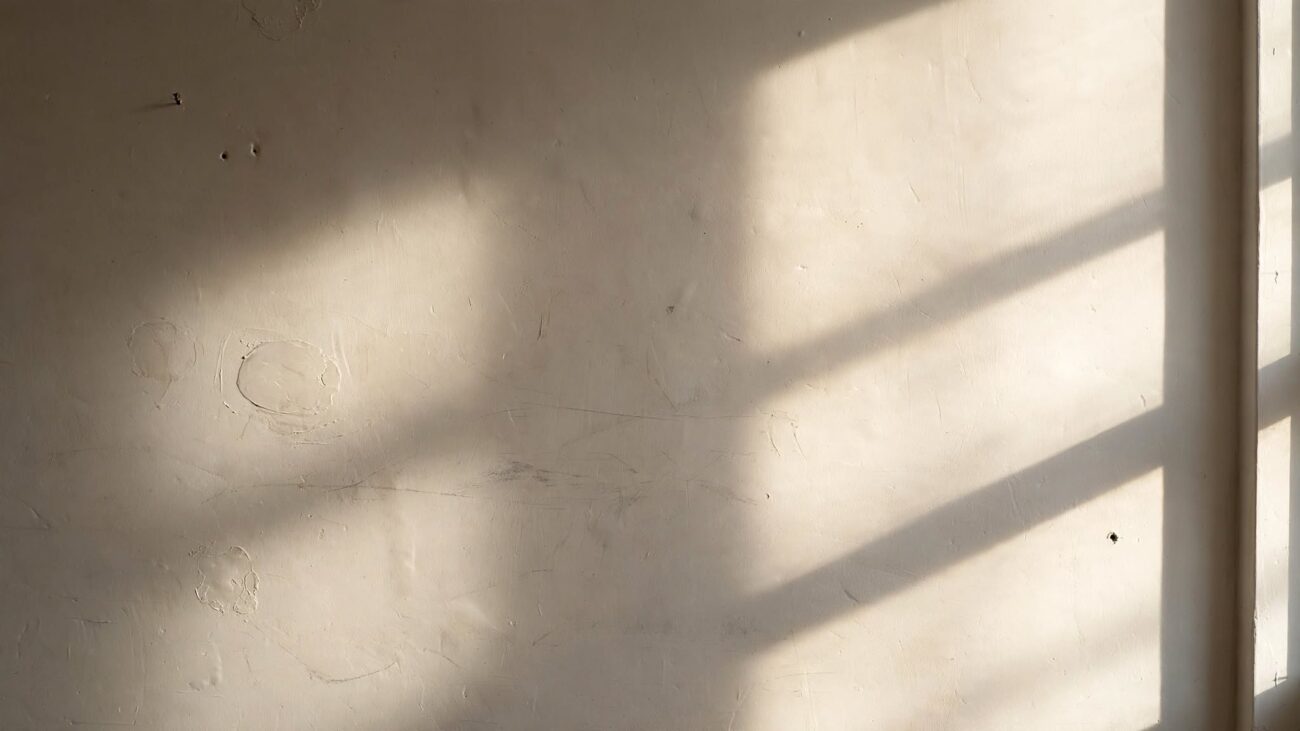
Dust, grease, and loose paint are removed, and the surfaces are checked for moisture and stains. If a stain comes from a leak, the leak has to be fixed first, or the stain will return through the new paint.
3. Repair walls and ceilings
Holes, cracks, and dents are filled. Larger or water-damaged areas may need board repaired or replaced; our guide to drywall repair vs replacement explains how to judge which.
4. Sand and dust off
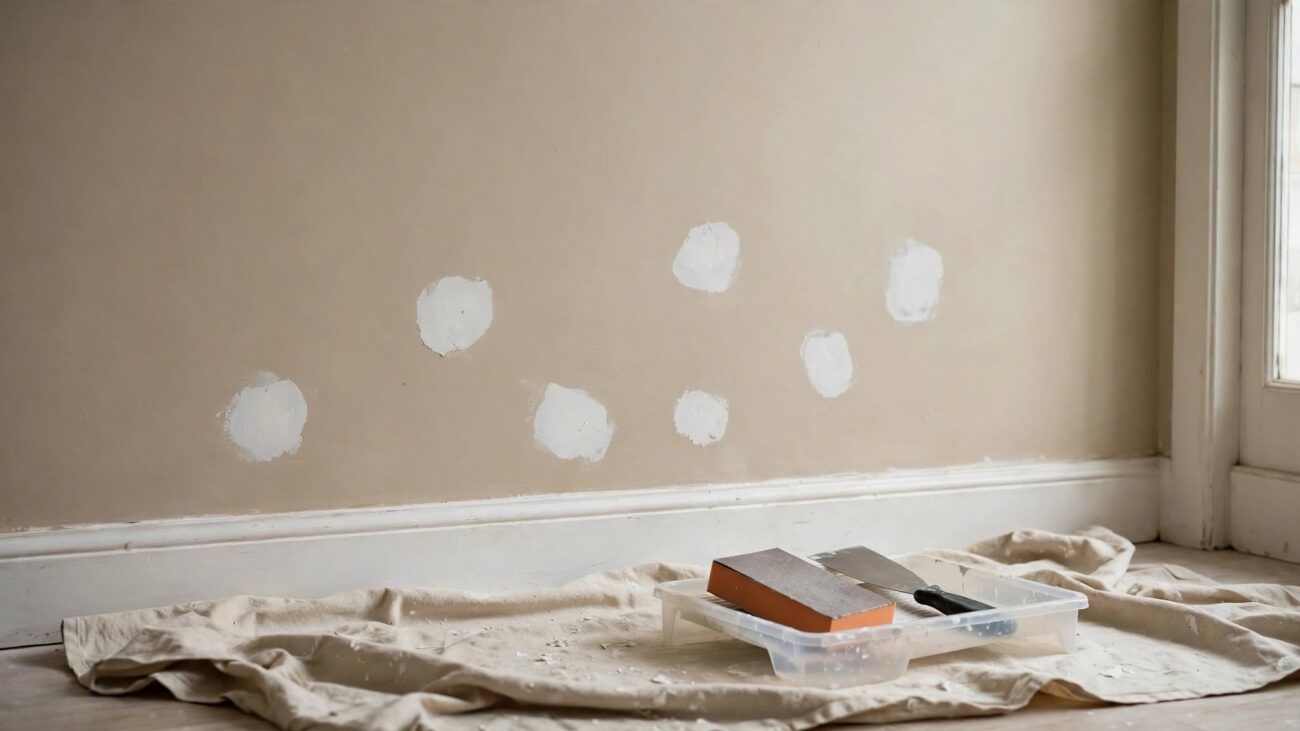
Patches and glossy surfaces are sanded smooth, and the dust is cleaned off so primer and paint can bond.
5. Caulk gaps
Gaps along trim, corners, and frames are caulked, so lines are crisp and the finish does not crack at the edges.
6. Prime where needed
Patches, stains, bare drywall, and strong color changes are primed. Primer evens out how the surface absorbs paint and helps block stains. Skipping it can leave dull or blotchy patches that show through the finish coats.
7. Mask edges
Tape goes along trim, windows, and ceilings where needed, or the edges are cut in by hand, depending on the surface and the painter’s method.
What You Should Do Before Painters Arrive
- Agree on who moves furniture. Clearing the room helps, and some painters move and cover furniture themselves. Settle it in the scope.
- Remove wall art, mirrors, and valuables. Take down what you can, and photograph any existing damage.
- Test colors in your light. Put large samples on the wall and look at them at different times of day.
- Plan for pets and people. Keep pets away from open paint, and plan for ventilation.
- Tell the building. Many buildings require notice, a certificate of insurance (COI), and an elevator booking, even for painting.
- Allow drying time. Leave the room clear for the time each coat needs, and do not put furniture back too soon.
Choosing Paint and Finish
Flat or matte finishes hide small flaws and suit ceilings and most walls. Semi-gloss is common on trim and doors because it wipes clean, but it shows imperfections more. In occupied apartments, low-odor, low-VOC paints reduce the smell, and washable finishes suit kitchens, hallways, and rentals. Always test samples in your own light before committing.
Co-ops, Condos, and Older Buildings
Many co-ops and condos require notice or approval even for painting, along with a certificate of insurance and set work hours, so ask the managing agent for the rules before you schedule. In housing built before 1978, paid work that disturbs painted surfaces, including sanding and scraping, falls under EPA’s lead-safe renovation rules, and a contractor should show proof of certification.
Older apartments also often have plaster walls rather than drywall, which can need different repair methods, so ask the painter to identify the wall material before pricing the prep.
How Long Does Interior Painting Take?
Time depends on the size of the apartment, the condition of the walls, the number of coats, whether you are changing color, and whether ceilings and trim are included. Prep and drying often take more time than the painting itself. Paint can be dry to the touch quickly but still needs longer to cure, so avoid scrubbing walls or hanging heavy items until it has hardened. Ask for a schedule that lists each stage and the drying times.
Painting Between Tenants
Landlords and managers painting a unit between tenants have the same prep needs and a tight window. Washable finishes, one standard color across units, and repairs finished before the paint goes on save time. See the checklist in our guide to make ready services, and the owner-focused tips in preparing apartments between tenants.
Working With Vanta Surfaces
Our interior painting team works in sequence with drywall repair, so patches are primed and checked before paint goes on. We provide a written scope that lists what is repaired, what is primed, and how many coats are included. Tell us your building’s rules and send photos of the rooms, and we will reply with next steps.
Interior Painting Prep: Frequently Asked Questions
Do I need to move furniture before painters arrive?
It depends on what you agree. Many painters move large pieces to the center of the room and cover them, but clearing as much as you can speeds the work and protects your belongings. Remove wall art, mirrors, and valuables, and decide in the written scope who handles furniture and who handles hanging items afterward.
Do painters fill holes and cracks?
Yes, small holes, cracks, and dents are normally filled, sanded, and primed as part of the prep, and the scope should say so. Larger damage, water stains, or soft areas may need drywall or plaster repair first. Ask what is included, so there are no surprises about the price or the schedule.
Do I need primer?
Often, yes: on repairs, stains, bare drywall, and when changing to a very different color. Primer evens out how the surface absorbs paint and helps block stains. Skipping it can leave dull or blotchy patches that show through the finish coats. Ask your contractor where primer will be used and why.
How long before I can use the room after painting?
Paint is usually dry to the touch within hours, but it needs more time to cure and harden. Keep the room ventilated, avoid scrubbing walls, and wait before hanging heavy items or pushing furniture against them. Check the paint’s instructions, and ask your painter when it is safe to put things back.
Do I need building approval to paint my apartment?
In many co-ops and condos you need approval or at least notice, along with a certificate of insurance and limits on work hours. Rules differ by building, so ask the managing agent before you schedule. A contractor can help prepare the documents the building asks for, but the approval comes from the board or management.
What does lead-safe mean for painting?
In housing built before 1978, paid work that disturbs painted surfaces must follow EPA’s lead-safe renovation rules, which include certified firms and specific work practices such as containment and cleanup. Ask any painter for proof of certification before they start, especially if sanding or scraping is involved.
How do I request a painting estimate?
Send photos of the rooms, the building address, and a list of what you want painted, including ceilings and trim, through the form on this page or call (646) 664-1696. Mention any repairs you already know about, and ask for a written scope showing prep, primer, coats, and a schedule.