



Blog
How Property Managers Reduce Vacancy Time

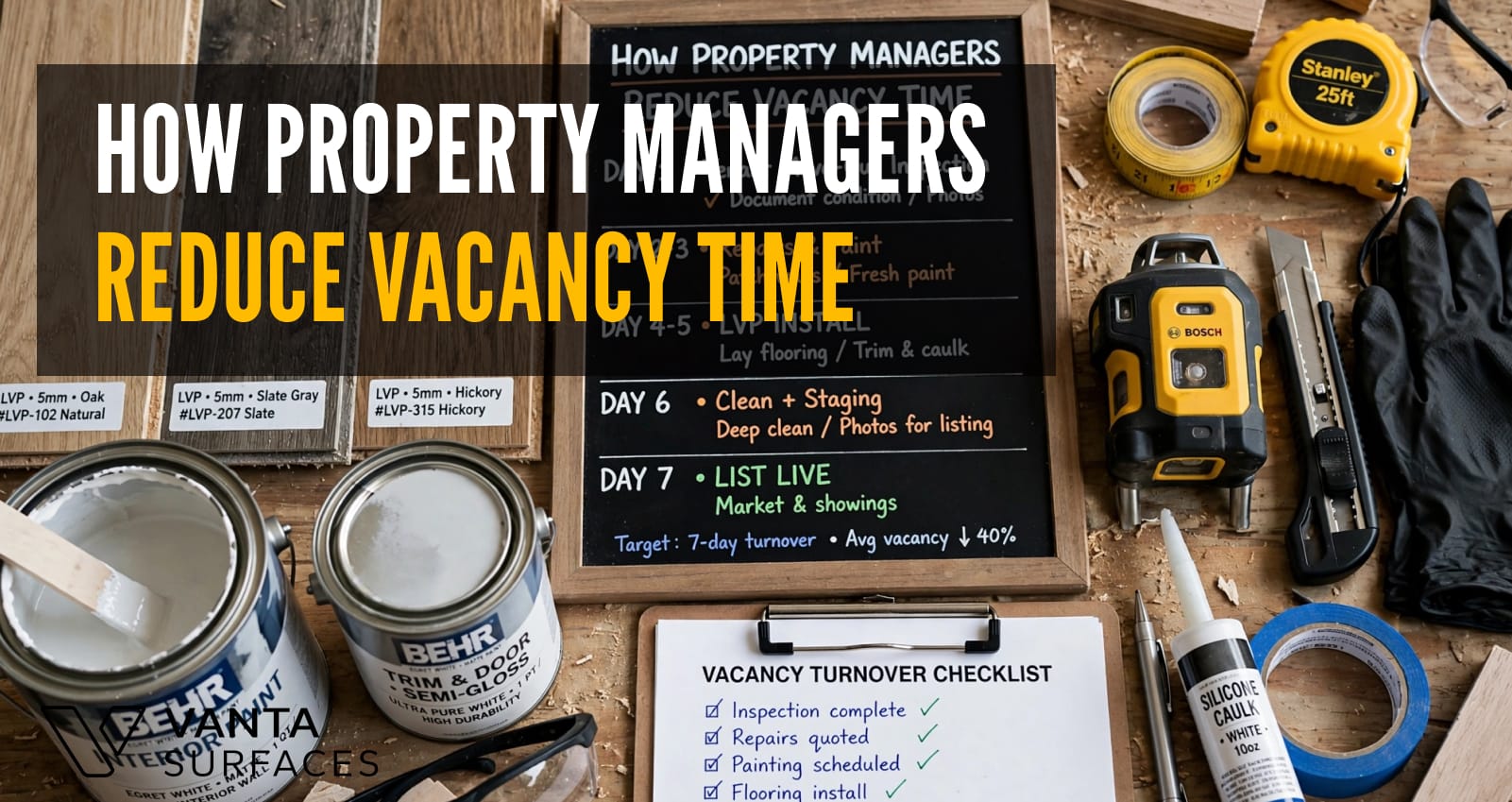
Every vacant day costs a property manager rent and attention. To understand how property managers reduce vacancy time, start by seeing where the days actually go: notice, move-out, inspection, scope and approvals, repair, paint, cleaning, photos, listing, and showings. Most of the avoidable delay sits in the middle, between move-out and listing-ready.
This guide walks through the turnover timeline, the practices that shorten it, and where a renovation contractor fits in. We are Vanta Surfaces, an NYC contractor that handles drywall, painting, and larger renovations for property managers.
How Property Managers Reduce Vacancy Time: Start With the Timeline
The turnover timeline
- Notice and scheduling. The clock starts when you know the unit is leaving, not when the keys come back.
- Move-out inspection. Walk the unit and list every repair.
- Scope and approvals. Decide what gets repaired, refreshed, or replaced, and get owner or board sign-off.
- Repair and paint. Drywall, priming, painting, and any kitchen or bathroom work.
- Clean and photograph. Final cleaning and listing photos.
- List and show. Marketing and showings.
The longest delays are usually in steps two to four: waiting for a bid, waiting for materials, and waiting for a crew to become available.
What an empty day costs
Take a hypothetical unit that rents for $3,000 a month. Each empty day costs about $100 in rent ($3,000 divided by 30), before utilities, marketing, and staff time. This is an illustration, not a market benchmark, but it shows why trimming a few days from each turnover adds up across a portfolio.
Practices That Shorten Turnover
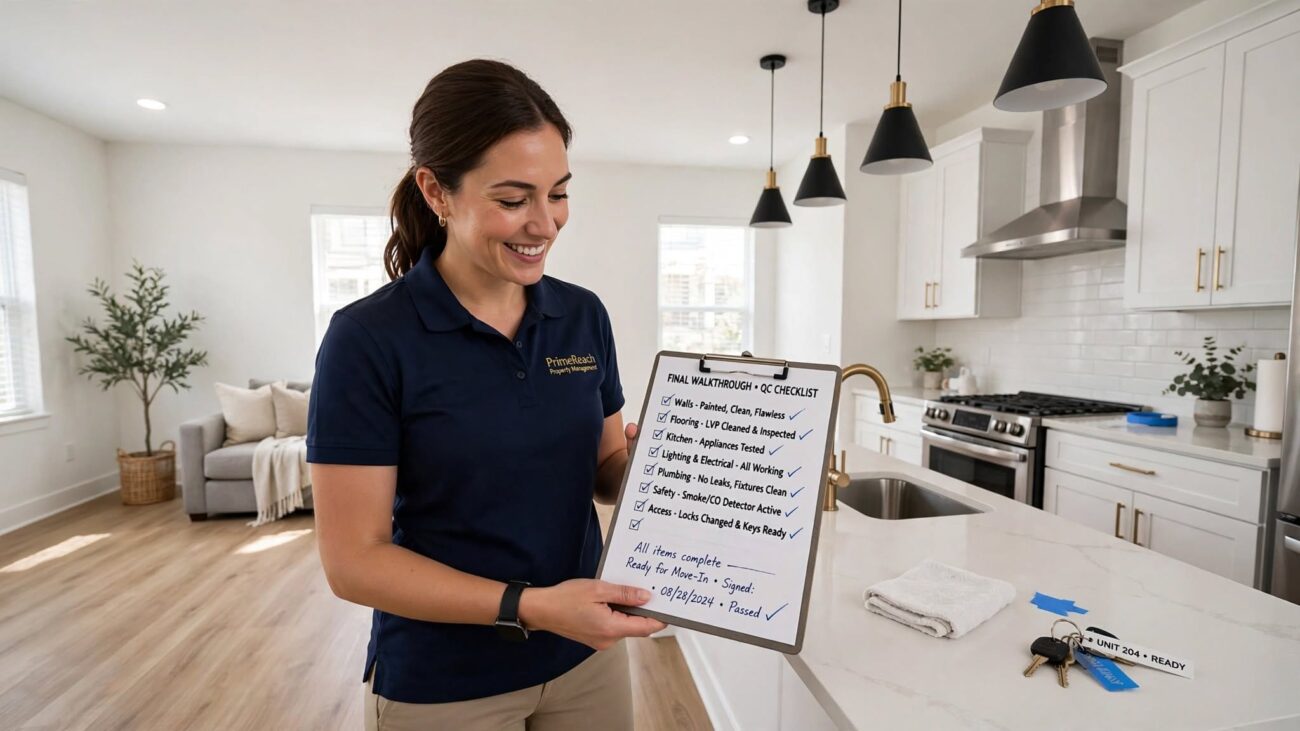
The practices below are the core of how property managers reduce vacancy time on every turnover.
Inspect before move-out
If the tenant gives notice, schedule a pre-move-out inspection. You can then order materials and get bids while the unit is still occupied, instead of starting from zero on the day the keys come back.
Standardize your finishes
Use one paint color and a short list of approved finishes across the portfolio. It removes decisions, makes touch-ups match, and lets you keep materials on hand.
Book the crew before the unit is empty
The best turnovers have a crew scheduled for the morning after move-out. Staging materials the day before saves a day or more that would otherwise be lost to deliveries.
Sequence the trades
Drywall goes before paint, paint before flooring, and flooring before final detailing. Out-of-order work causes damage and redo costs, which is where many turnovers lose days.
Run the listing in parallel
You do not have to wait until every detail is finished. Publish the listing with an available date, and schedule photos as soon as the walls are painted and the unit is clean.
What a Renovation Contractor Handles in a Turnover
Walls and paint
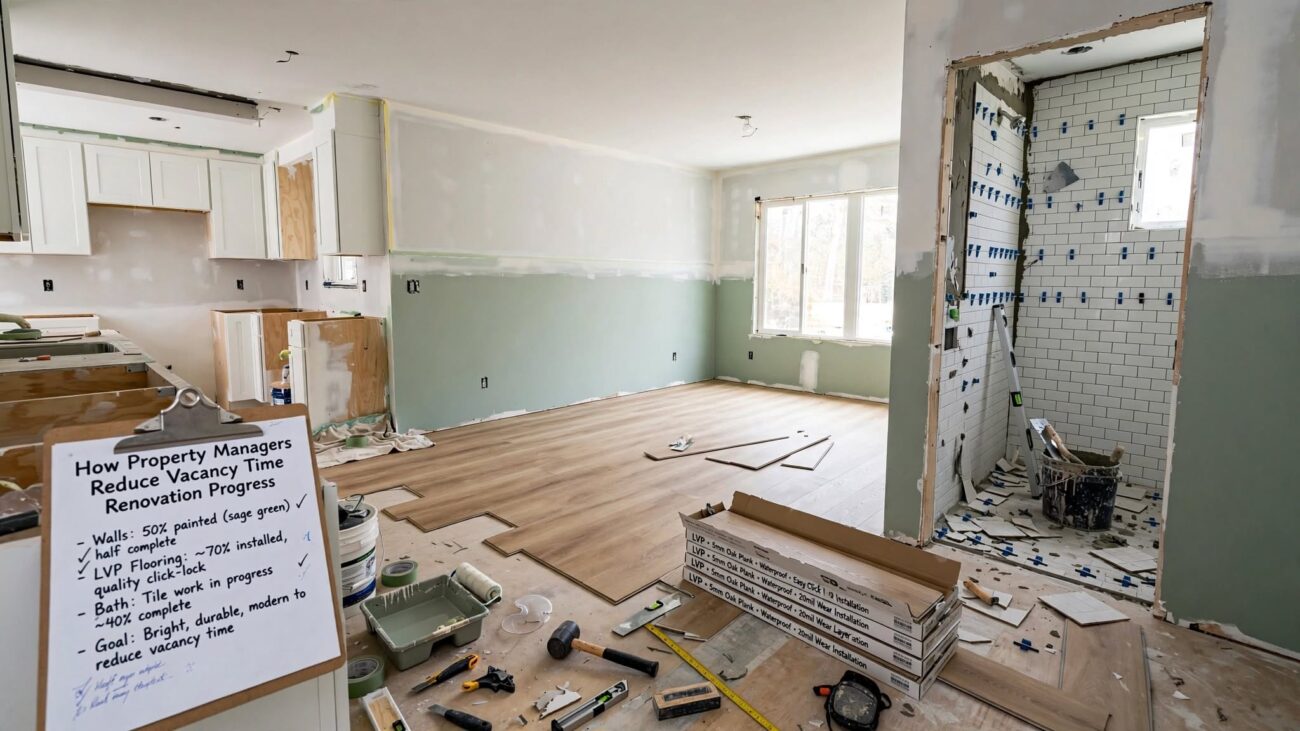
Most turnovers are mainly walls: nail holes, scuffs, cracks, and small water stains. Our drywall installation crews patch and skim coat, and our interior painting uses washable, low-odor paint that holds up between tenants. Good prep matters most here, since poorly feathered patches show up in listing photos.
When the whole unit is repainted in one coordinated pass, the walls dry evenly and the unit smells fresh sooner, which helps the unit look right in photos and showings.

Refresh or renovate?
The most important turnover decision is how far to go with kitchens and bathrooms. If cabinets are sound, architectural film wraps can renew them without demolition. If layouts, plumbing, or waterproofing have reached the end of their life, a full kitchen renovation or bathroom renovation is the better long-term choice.
Rent-stabilized units
The rules for recovering renovation costs in rent-stabilized apartments are specific and have changed over the years. Check the current requirements with your counsel or DHCR guidance before you decide on a scope.
Building Rules That Slow Turnovers
Access and insurance
Most NYC buildings require a certificate of insurance (COI) from any contractor, a reserved elevator slot, and work within set hours. Handle the COI before the unit empties, because waiting on paperwork is one of the easiest delays to avoid.
Pre-1978 buildings and lead paint
In housing built before 1978, paid work that disturbs painted surfaces must follow EPA’s lead-safe renovation (RRP) rules. Ask your contractor for proof of certification, and add the extra setup time to your schedule.
Co-ops and condos
Boards often require notice or approval, even for repainting and repairs. Ask for the current renovation rules at the start of the turnover, not at the end.
How Long Should a Turnover Take?
There is no benchmark that fits every building. A cosmetic turnover, with patching, paint, and cleaning, can be a matter of days when materials are on hand and trades are booked. Kitchens and bathrooms take weeks. The best way to improve is to track your own average, measured in days from move-out to listing-ready, and compare it from one unit to the next. Tracking that number is the simplest way to measure how property managers reduce vacancy time in practice, and to see whether your changes are working.
Cost depends on the condition of the unit, the scope, materials, and building requirements. We provide a written estimate after reviewing photos or visiting the unit.
Why Choose Vanta Surfaces for Turnover Renovations
One team and one point of contact
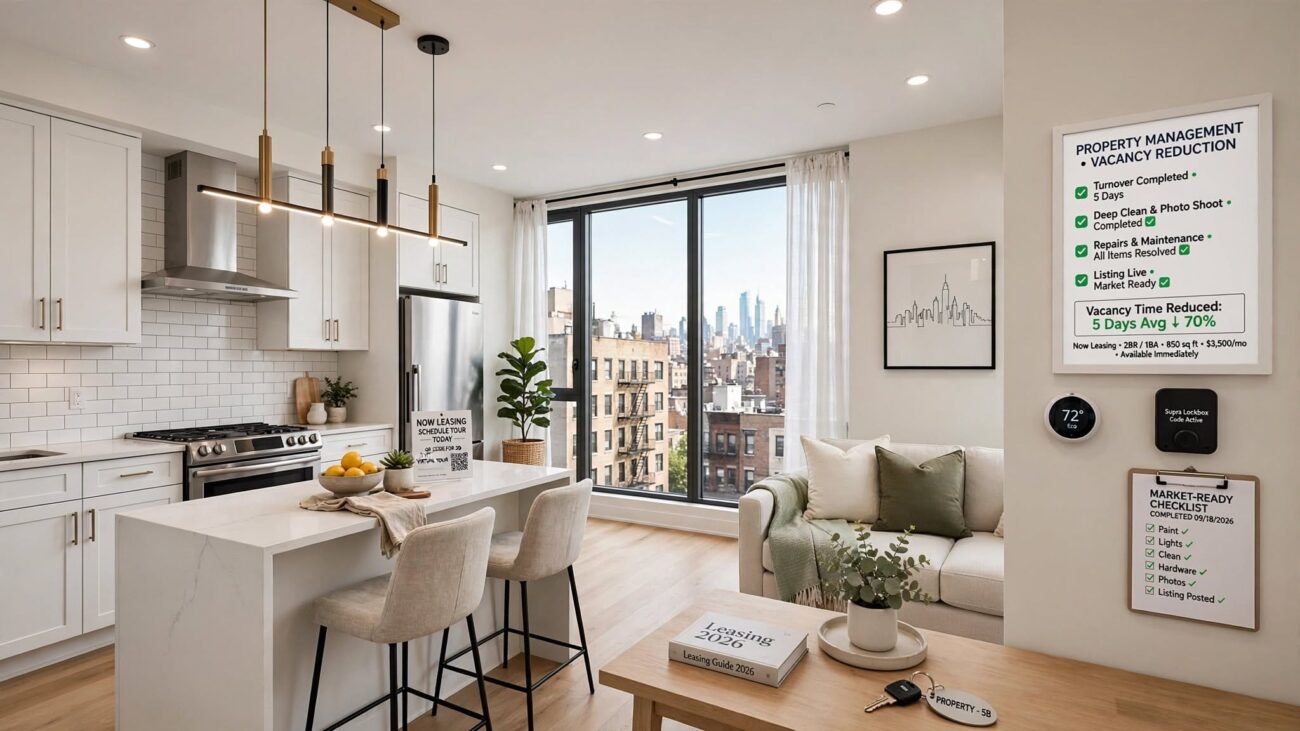
Our turnover work is organized around how property managers reduce vacancy time: one scope, one crew, and a start date set before the unit is empty. One project manager handles scheduling, quality, and communication, so you do not have to coordinate separate painters, drywall crews, and tile installers on every turnover.
Built for occupied buildings
We work across Manhattan, Brooklyn, Queens, and the Bronx, protect common areas, follow building hours, and clean up daily. We are licensed and insured (NYC DCWP license 2137851-DCWP). See our page for property managers or browse finished work on our projects page.
Vacancy Time and Turnover: Frequently Asked Questions
How do property managers reduce vacancy time?
By shortening the days between move-out and listing-ready: inspect before move-out, standardize finishes, book trades ahead, sequence the work correctly, and run the listing in parallel with the repairs.
What is a normal turnover time?
It varies with the unit’s condition, the building’s rules, and the scope. Rather than relying on a generic number, track your own average from move-out to listing-ready and work to lower it. That is the practical answer to how property managers reduce vacancy time across a portfolio.
Should I repaint or fully renovate between tenants?
Repaint and repair when the layout and finishes are sound. Renovate when kitchens, bathrooms, or surfaces are worn out or failing, because leaving them often costs more in repeated repairs.
How do I schedule a contractor before move-out?
Schedule a pre-move-out walkthrough, then book the crew and order materials so work can start the day after the unit empties. Give the contractor access details and the building’s COI requirements in advance.
Can anything be done in a single day?
Small cosmetic scopes can sometimes be completed in a day, depending on the size of the unit and the condition of the surfaces. Film wraps and repainting are common examples.
Do rent-stabilized apartments follow different rules?
Yes. The rules about recovering renovation costs are specific, so check current guidance with your counsel or DHCR before you set the scope.
Can you handle many units at once?
Yes. We scale crews for multi-unit work and keep finishes consistent. See our page for property managers for details.
How do I get a turnover estimate?
Send photos, the building address, and a short scope through the form on this page, or call (646) 664-1696. We review the details and reply with next steps.